Gadgets

iPhone 16 Pro, Pixel 9 Pro, or Galaxy S24 Ultra: Which Top Phone Has the Best Camera?

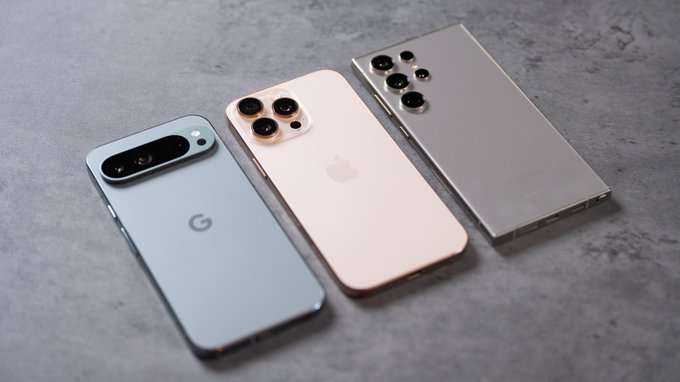
Choosing the Best Smartphone Camera: iPhone 16 Pro Max, Galaxy S24 Ultra, or Pixel 9 Pro XL? When you're looking for a new smartphone, you should think about several important things: the price, specifications, and different features. However, for people who create content, love taking selfies, or are passionate about photography, the camera is the most important aspect of a smartphone. I have spent a few weeks testing the cameras and features of some of the top smartphones available today. First, let's talk about the iPhone 16 Pro Max. Instead of completely changing everything, Apple has made some significant upgrades. The main camera now has more megapixels and a better sensor, which means it can take clearer pictures faster. A key new feature is the Camera Control button, which lets you take photos like you would with a point-and-shoot camera or DSLR. Apple also added many AI features while keeping popular options like Cinematic and Spatial modes. Next up is the Samsung Galaxy S24 Ultra. Known for its amazing optical zoom, this phone keeps the 100X Space Zoom and the 200MP main camera from its previous model. However, Samsung replaced the 10X periscope lens with a 5X telephoto lens. The S24 Ultra also comes with many AI features to help improve your photos. Finally, we have the Google Pixel 9 Pro XL. Although it might not be as well-known, the Pixel series has a strong reputation for taking excellent photos, especially in low light. Google hasn't changed much this time around; they slightly increased the size of the wide sensor to let in more light. The ultrawide lens has also been improved. Thanks to Google Gemini, editing your photos and videos is easier than ever. Specifications In terms of cameras, this year hasn’t brought any major hardware changes for our top smartphones. The iPhone 16 Pro Max now has a 48MP ultrawide camera with an ƒ/2.2 aperture, up from last year's 12MP. Its main Fusion camera is also 48MP with an ƒ/1.78 aperture. The 12MP telephoto camera offers 5x digital zoom and 25x digital zoom from last year. The front camera is also 12MP with an f/1.9 aperture. Samsung has removed the 10X periscope sensor and replaced it with a 5X 50-MP telephoto camera that has better resolution for optical zoom up to 10X. The 200MP (f/1.7 aperture) main camera and the 12MP (f/2.2 aperture) ultrawide camera are both back, matching the front camera. The Pixel 9 Pro XL features a slightly larger 50-MP (f/3.4 aperture) wide sensor to capture more light. Its primary camera has a 200MP (f/1.7 aperture) sensor that works well in night mode and for depth effects. The ultrawide camera has seen the biggest upgrade, increasing to a full 48MP sensor (ƒ/1.7 aperture) from last year’s 12MP version. However, the telephoto camera remains at 48MP with last year’s 5x optical zoom and 30x Super Res Zoom. The front camera is 42MP with an ƒ/2.2 aperture. On paper, the Samsung Galaxy S24 Ultra stands out due to its impressive 200MP main sensor and powerful zoom capabilities. There has been a lot of discussion about the AI features in each flagship phone's camera for photography and videography. However, each smartphone also has some built-in features that are not AI-related and are worth mentioning. For instance, the Pixel includes Top Shot, which records a short video when you press the photo button to help you choose the best shot from a series of pictures. Action Pan focuses on a moving subject while blurring the background, and Long Exposure blurs the subject while keeping the background clear. The Pixel also offers Pro controls, allowing you to shoot at 50MP, RAW, or Manual settings to choose which lens you want to use. The Rise of AI in Photo Editing: How Google, Apple, and Samsung Are Changing the Game Today, artificial intelligence (AI) is everywhere, and it’s also making a big difference in our photos. While some AI tools create strange images with extra fingers and toes, many are actually helping to turn our pictures into beautiful works of art. Companies like Google, Apple, and Samsung are using AI to improve their photo editing features, trying to compete with popular software like Adobe Photoshop, DaVinci Resolve, and GIMP. Google has been a leader in AI photo editing with its Magic Editor. This tool can automatically crop, resize, extend, and reframe your photos. You can also move and resize objects, remove unwanted items, and adjust colors and lighting. One cool feature called Zoom Enhance lets you zoom in on a subject after taking the picture without losing quality. Best Shot takes multiple pictures at once and helps you choose the best one for group photos. Another favorite feature is Add Me, which combines two photos so that the photographer can be included in the shot. Finally, Reimagine Me uses text prompts to create entirely new images. Samsung has its own AI tools in the Galaxy app. The Edit Suggestions feature gives you recommendations for editing your images, like Remaster or Erase Shadows. Generative Edit allows you to remove unwanted objects by simply circling them. You can also relocate or resize items in your photos and add AI-generated drawings using the Sketch to Edit feature. Portrait Studio lets you change your photos into different styles, such as Watercolor or 3D Cartoon. Apple also offers some generative AI photo editing features that let you easily remove unwanted people or objects from your pictures. However, Apple is more cautious about using AI in photography, believing that many photographers prefer a more natural look without too much AI interference. With its growing range of AI features, Google is constantly expanding what its cameras can do both before and after taking pictures. This is why the Pixel stands out in this competition. Wide Wow, judging this round was really challenging. In most of the photos, the phones performed almost equally. I had to carefully examine the details, colors, and contrast, and I even discussed it with my boyfriend, who is a professional photographer, to decide on the winners. Let's start with my Droltza Tzuentes Halloween costume. The color tone and temperature were very similar in all three photos, especially in my bubblegum pink hair and mocha skin tone. The only exception was the iPhone 16 Pro Max, which appeared a bit darker. However, the Pixel 9 Pro XL won this round because it showed the cleanest details when zoomed in, revealing all the stray eyebrow hairs that remind me it's time for a threading appointment. In a photo of some crystals on a table, it was a tie between the Pixel and the Samsung Galaxy S24 Ultra regarding detail. The black and pink orb at the top of the decorations looked sharper on the S24 Ultra, with a nice reflection. Speaking of reflections, the Samsung had the best reflections overall, including a mini pyramid and a black metal holder. But when looking at the objects in the foreground, like the ivory-and-sandalwood-colored egg, the Pixel clearly took the lead. Don’t count out the iPhone just yet! In my shots of some pomegranates, the Pro Max not only showed better colors but also revealed blemishes and lines in the shiny red skin that you can't see in the other photos unless you zoom in. You can even see the groove in the knife handle. This round is too close to decide, so the Wide shot round ends in a draw. Ultrawide In this round of testing, I found that the iPhone shows the most natural colors, while the Samsung tends to be too bright, and the Pixel is somewhere in between. In my first photo of some apartment buildings, the iPhone looked a bit dull compared to the S24 and Pixel. However, when I looked more closely, I noticed that the S24 had clearer details, especially in the windows and brick walls of the buildings. For a photo of a neighborhood street, the iPhone 16 Pro Max performed the best. It captured the tree with its bright red leaves and the red brick building very well. When I zoomed in, it also showed the clearest details of the construction site next door. Overall, the iPhone 16 Pro Max won this round because of its color accuracy, clarity, and high photo quality. Low Light Smartphones have really improved in low-light photography. Instead of blurry images in dark places, we can now get clear photos with good colors and details, depending on how much light is available. For these low-light tests, I took pictures in dimly lit areas as well as in near darkness. In my first photo of my basement floor, I set the dimmer to its lowest setting. While you can see everything in all three photos, the iPhone produced a darker image, while the Pixel and S24 showed much brighter results. The Pixel had more accurate colors, especially with my Hulk, Michonne, and Sully figurines. However, the light reflections on the TV were sharper in the S24 Ultra. After turning off all the lights, I took another shot, but the results were not great. With only some light from my gaming desktop and other tech devices, the scene was very dark. The only thing visible in each photo was Sully’s silhouette. It was clearest in the Pixel, followed by the S24 Ultra, while the iPhone resulted in a blurry image. My final photo was taken in a dark American Legion hall in a small town. The Pixel performed best here with the clearest image and best colors. The iPhone came in second but lacked the sharpness of the Pixel. The Samsung came last because, even though you could see everything in the photo, it was much blurrier than the other two phones. The Pixel 9 Pro XL won this round for its excellent performance in low-light conditions, even with very little light available. Portrait Mode Let's revisit my Halloween costume, but this time in Portrait mode. All three phones produced excellent results, making it hard for me to choose a winner. Even my professional photographer found it challenging to decide. First, let's talk about color. I was impressed with how my skin looked in every photo. Although Samsung phones usually have very bright colors, the S24 Ultra got it just right this time. My hair and the spooky pink contacts really stood out in each picture. Now, let's focus on the details. Even that was tricky because you could see every ridge in my horns, the creases in the wings, and even the slight marks from my sharp red nails on my skin. When I zoomed in, I found the winner. However, after closely examining the side panel of the corset, I noticed that the iPhone had more creases and the lace pattern on the skirt was clearer. In the next round of photos, the iPhone 16 Pro Max performed best again. The subject's skin looked warmer, and you could see every hair, even those caught in his navy blue cap. I also liked the background blur, although the S24 Ultra had a deeper effect. The iPhone 16 Pro Max wins this round for its warm tones and clear details. Selfies For my first selfies, I had three different shades of pink in each photo. The Pixel's shot looked more washed out compared to the others. While my skin tone looked more accurate on the S24 Ultra, my hair appeared lighter than it actually is. This left the iPhone as the clear winner for color and sharpness, as it even captured some gray hairs and a bit of lipstick smudging on my fangs. In my second set of selfies, I realized I need to visit my hairstylist soon! Besides noticing some gray hairs, my black Snek plushie looked great. The iPhone still provided the best representation of my skin and the deep grooves in my sweater’s collar. Panorama Photos In my panorama test images, Samsung had the most issues, shown by the wobbly banister and compact look of the image. The iPhone's photo looked much more spacious than Samsung's. While the railings in the iPhone's photo were straighter than those of the other phones, they still had some irregularities. There was also a jagged edge at the top of the image because my hand slipped a bit during the shot. I tried to fix it, but it was too late. The Pixel 9 Pro XL delivered the best result with a wide scene, straight banisters, moody clouds, and a beautiful sunset. Google's guidelines helped me avoid any hand slips during the capture. The Pixel 9 Pro XL wins this round for its ease of use and smooth results. Digital Zoom In this round, the Galaxy S24 Ultra takes the lead with its 100X Space Zoom. While it may not reach all of Samsung’s claims for astrophotography, the zoom is still impressive. In a photo of a distant tree, the Samsung captured the top of it best. However, it did lose some detail while trying to get that close-up shot. I also took a picture of the Manhattan skyline from my rooftop in Brooklyn. Again, the S24 Ultra's digital zoom reached farthest, allowing me to focus on the top of a building. However, if sharpness is what you want, the Pixel 9 Pro XL did better with detail. Using a sturdy tripod would help reduce any blurriness caused by shaky hands. The Samsung Galaxy S24 Ultra has the most powerful digital zoom available. Final Thoughts This has been one of the toughest comparisons I've done in a while, thanks to how much smartphone cameras have improved over the years. Let’s discuss the runners-up, starting with Samsung. The Galaxy S24 Ultra certainly takes great photos.


About author

poorya fayazi

Quisque sed tristique felis. Lorem visit my website amet, consectetur adipiscing elit. Phasellus quis mi auctor, tincidunt nisl eget, finibus odio. Duis tempus elit quis risus congue feugiat. Thanks for stop Tech Blog!


You may also like


0 Comments

There is no comment yet.


Leave a Comment

Scroll to Top